Stay ahead of the curve with technical articles, design tips, and industry analysis from the leaders in precision linear motion.
Loading...
Engineering Insights & Motion Design Resources
Welcome to the Helix Linear Technologies Blog, your source for engineering insights, motion system design guidance, and industry trends in precision linear motion. Our blog is dedicated to helping mechanical engineers, product designers, automation professionals, and technical leaders stay informed, inspired, and empowered with practical knowledge you can apply to real-world projects.
Here, you’ll find:
Engineering tutorials and how-tos that break down complex topics such as lead screw selection, ball screw performance, actuator integration, and motion control best practices.
Application case studies that showcase real examples of precision motion systems in industries like manufacturing automation, robotics, medical devices, and semiconductor equipment.
Technical deep dives that explain design principles, calculate performance criteria, and explore emerging technologies shaping the future of motion components.
Industry perspectives and trends that highlight innovation, standards developments, and strategic insights for advanced engineering teams.
Whether you’re refining a current design, planning a new machine concept, or keeping current with linear motion technology, the Helix Linear blog is designed to support your engineering journey. Every post is written with clarity, backed by technical expertise, and aligned with practical engineering needs to help you make better specification, design, and integration decisions.
Explore our latest content, bookmark your favorite posts, and leverage these resources to accelerate development cycles, improve mechanical performance, and stay ahead in motion system design.
Helix Linear Technologies is committed to providing valuable educational content that empowers engineers to build more precise, efficient, and innovative systems. Dive into our blog and start learning today.
Use arrow keys to navigate between tabs. Press Enter or Space to activate a tab.
Blog
Subscribe to our newsletter
Linear Motion Components in Aerospace and Defense Industry
The aerospace and defense industry is positioned as one of the largest and most powerful industries in the United States. In fact, for over 100 years, this industry has moved, connected, and secured t
How To Know Which Lead Screw Pitch and Lead is Best
What Is Lead Screw Pitch?
The pitch of a lead screw is simply the distance (spacing) between adjacent threads. Many standard thread designations express this as TPI or Threads Per Inch. Threads per in
Aluminum Lead Screws Efficient for Lightweight & Non-Magnetic Projects
Aluminum Lead Screws for Lightweight and Non-Magnetic Applications
For lightweight or non-magnetic applications in the medical, aerospace, and transportation industry, aluminum lead screws are the i
Advanced Customizing Features: Build Your Own Custom Lead Screws
Build a custom lead screw in three clicks and download it in over 100 different file formats.
Our CAD model generation tool lets you build a custom lead screw in over 2 million possible configurati
Helix Linear Showcases the Most Effective Precision Lead Screws
You already know that lead screws quickly cement themselves as the preferred choice among product developers in linear motion applications. Not only are they more affordable than competing ball scre
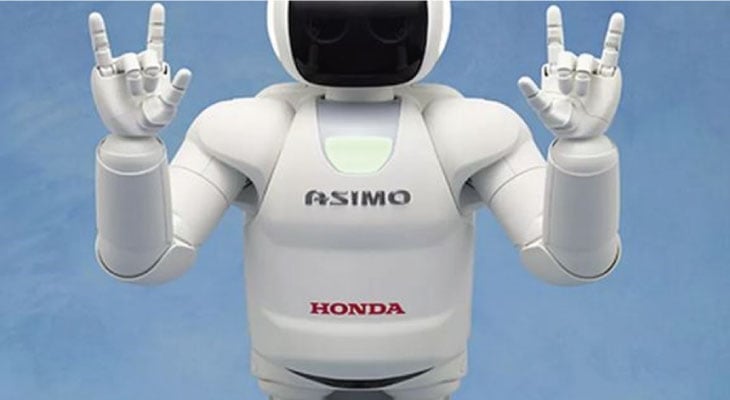
ASIMO - Stands for Advanced Step in Innovative Mobility.
ASIMO is a bipedal humanoid robot Honda has been developing, intending to create robots that will coexist with and be helpful to people since its first introduction in 2000. In 2011, the latest versio
Helix Linear, a leader in the manufacture of lead screws and stepper motor linear actuators is formally announcing the separation from its affiliated company Nook Industries.
Nook Industries, founded
Lead screws are the norm for today's linear motion applications. However, despite the lead screw's advantages over competing technologies (i.e., affordability, precision, the ability to design with fr
Pay Attention to This When Selecting Linear Guide System
Linear Guide Systems are perhaps the most diverse group of products in the motion control industry. Available in numerous configurations with widely varying performance characteristics, selecting the
Everything You Need to Know About Electric Cylinders
Electric Cylinders (or electro-mechanical cylinders) are captive linear actuators designed as modular systems.
Due to lower maintenance costs, enhanced motion control, and a long list of additional be
How Linear Motion is Used in the Chemical Industry
The integration of the most advanced, comprehensive automation technology is aiding the chemical industry in meeting the fast-paced demands of a globally saturated market. Automation solutions from He
Why is Thread Rolling important process for Lead Screws?
Thread rolling is a metal forging process that forms leas screw threads by passing material under high pressure through a set of hardened dies. In the thread rolling machine, dies are skewed or pitche